
AEO for Hotels: How to Become the Property ChatGPT and Google AI Recommend First
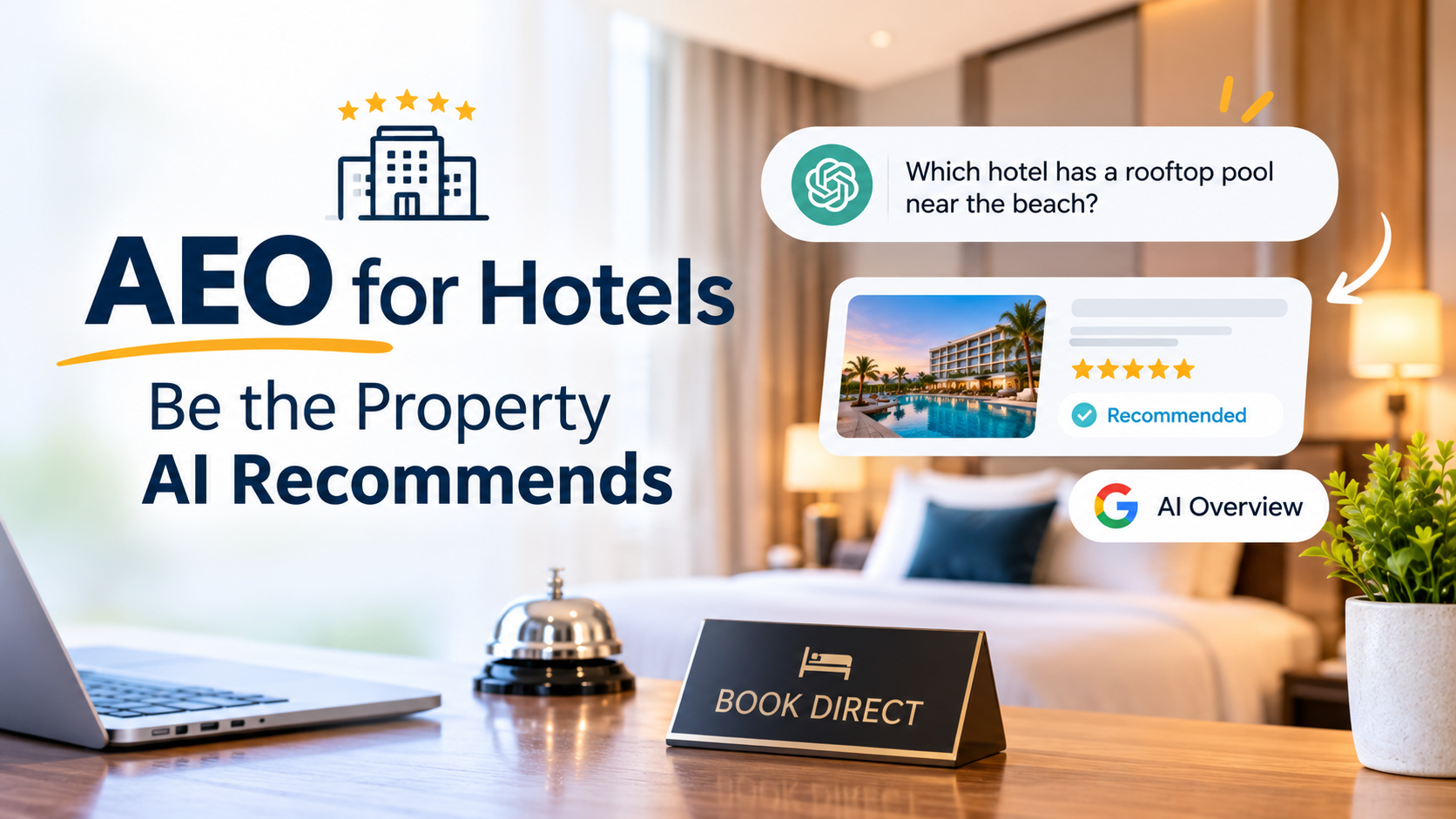
A traveler no longer types five keywords and scrolls through ten blue links. Increasingly, the traveler asks a full question: "Which boutique hotel near the beach has a rooftop pool and free airport pickup?" Then an AI tool answers in a few lines and names two or three properties. If a hotel is not one of them, it is invisible at the exact moment a guest is ready to book.
That shift is why AEO for hotels has moved from a nice-to-have to a core part of hotel digital marketing. This guide explains what AEO is, how it connects with GEO and traditional SEO, and the practical steps that help a property earn those AI recommendations, along with more calls from its Google Business Profile.
What Is AEO for Hotels?
AEO stands for Answer Engine Optimization. It is the practice of structuring a hotel's website, Google Business Profile and online presence so that search engines and AI assistants can find a clear, trustworthy answer about the property and show it directly to the traveler.
In simple words, SEO helps a hotel rank. AEO helps a hotel get chosen as the answer.
AEO vs GEO vs SEO: What Is the Difference?
These three terms are closely connected, and a strong hotel strategy uses all of them.
- SEO (Search Engine Optimization) helps a website rank in search results through content, technical health and links.
- AEO (Answer Engine Optimization) shapes content into short, direct answers that featured snippets, voice assistants and AI overviews can lift and display.
- GEO (Generative Engine Optimization) builds the trust signals, such as reviews, mentions and consistent business data, that generative AI tools like ChatGPT, Gemini and Perplexity rely on when they recommend a brand.
Think of SEO as the foundation, AEO as the clear answer on top of it and GEO as the reputation that makes AI tools confident enough to recommend the hotel.
Why AEO Matters for Hotels Right Now
Hotel searches are naturally question-based. Travelers want to know about check-in times, pet policy, parking, nearby attractions, family rooms, banquet capacity and wedding packages. These are exactly the questions AI tools love to answer.
There are three big reasons hotels should act early:
- Fewer clicks, more decisions. When an AI summary answers the question, the traveler may never open a website. The hotel named in that summary wins the attention.
- Direct bookings. A guest who finds the hotel through an AI answer and then visits the official website avoids paying an online travel agency commission.
- Early advantage. Many hotels have not optimized for AI search yet, so the properties that do it now can build authority while competition is still low.
7 Practical Ways to Optimize a Hotel for AEO and GEO
1. Lead with the answer
Every key page should answer the main question in the first two or three lines, then add detail below. For example, a rooms page can open with the room types, the starting features and the booking method before moving into amenities. Short, plain sentences are easier for both humans and AI to understand.
2. Build FAQ sections on important pages
Add real traveler questions to room, dining, banquet and location pages. Use the exact way guests ask them, such as "Is breakfast included?" or "How far is the hotel from the airport?" Keep each answer to two or three sentences.
3. Add structured data (schema markup)
Schema markup is code that labels a page's information so machines can read it without guessing. Hotel, LocalBusiness, FAQPage and Review schema help search engines understand the property, its address, amenities, ratings and questions.
4. Keep the Google Business Profile complete and active
For most local and domestic travelers, the Google Business Profile is the first impression. A fully filled profile with the correct category, services, photos, updated hours, a booking link and regular posts feeds both Google Search and Google's AI features. Guests who see a polished profile are far more likely to tap the call button.
5. Protect NAP consistency
NAP means Name, Address and Phone number. If the hotel's details differ between its website, Google profile, travel portals and directories, AI tools lose confidence. Matching details everywhere is one of the simplest trust signals in GEO.
6. Earn and answer reviews
Reviews tell AI tools what real guests think. Hotels that collect fresh reviews, mention specifics like service, location and food, and reply to feedback in a professional tone build the kind of reputation generative engines prefer to recommend.
7. Publish helpful, expert content
Blogs, destination guides and event pages that show real knowledge of the property and the city build topical authority. Content that is original, current and written with a clear point of view stands a better chance of being cited by AI than generic text.
Want your hotel to be the answer travelers see first? Talk to the Digital for Hotels team about a free AEO and SEO review. Call today or book a free consultation and find out where your property stands in AI search.
Common AEO Mistakes Hotels Make
- Writing for keywords instead of questions. Pages stuffed with phrases but no clear answers rarely earn snippets or AI mentions.
- Ignoring the Google Business Profile. An outdated profile with missing photos or wrong hours quietly loses calls.
- Inconsistent business details. Different phone numbers or addresses across the web weaken trust.
- Hiding useful information in images or PDFs. Menus, tariffs and policies are easier for machines to read as plain text on the page.
- Skipping technical basics. Slow pages, poor mobile design and missing schema make it harder for any engine to rely on the site.
How AEO Supports Calls and Leads
AEO is not only about visibility. A clear answer builds confidence, and confidence drives action. When a traveler sees accurate room details, a trusted rating and a visible phone number, the next step is usually a call, a direction request or a booking click. A hotel with a strong website foundation, supported by professional SEO services for hotels, turns that visibility into measurable inquiries.
How Digital for Hotels Can Help
As a hotel digital marketing agency, Digital for Hotels combines SEO, AEO, GEO, Google Business Profile management and content strategy under one roof. The team studies how guests actually search, restructures the website to answer those questions and strengthens the trust signals AI tools look for. The goal is simple: more visibility, more calls and more direct bookings.
Ready to be the hotel AI recommends? Reach out to Digital for Hotels today and start building a property that search engines and travelers trust.
Frequently asked questions
1. What is AEO for hotels in simple words?
AEO for hotels means organizing a hotel's website and online listings so search engines and AI assistants can give travelers a clear, accurate answer about the property.
2. Is AEO different from SEO?
Yes. SEO focuses on ranking in search results, while AEO focuses on being the direct answer inside snippets, voice results and AI summaries. The two work best together.
3. What is GEO in hotel marketing?
GEO, or Generative Engine Optimization, is the work of building the reviews, brand mentions and consistent business data that generative AI tools use to decide which hotels to recommend.
4. Can AEO help increase calls from a Google Business Profile?
Yes. A complete profile with accurate details, photos, reviews and a visible phone number gives travelers the confidence to call directly.
5. How long does AEO take to show results?
AEO builds on SEO, so improvements usually appear gradually over a few months as content is indexed and trust signals grow. Results vary by market and competition.
6. Do small hotels and resorts need AEO?
Yes. Smaller properties often benefit the most, because clear answers and a strong local profile help them compete with bigger brands.
7. Does a hotel need schema markup for AEO?
Schema is not mandatory, but it makes a hotel's details much easier for search engines and AI tools to read, so it is strongly recommended.